Creative Systems in Practice
I build creative infrastructure that scales—systems, workflows, and frameworks that turn chaos into clarity and enable teams to perform.
Workflows & Frameworks
I build systems that enable creative teams to work with clarity, speed, and excellence.
-
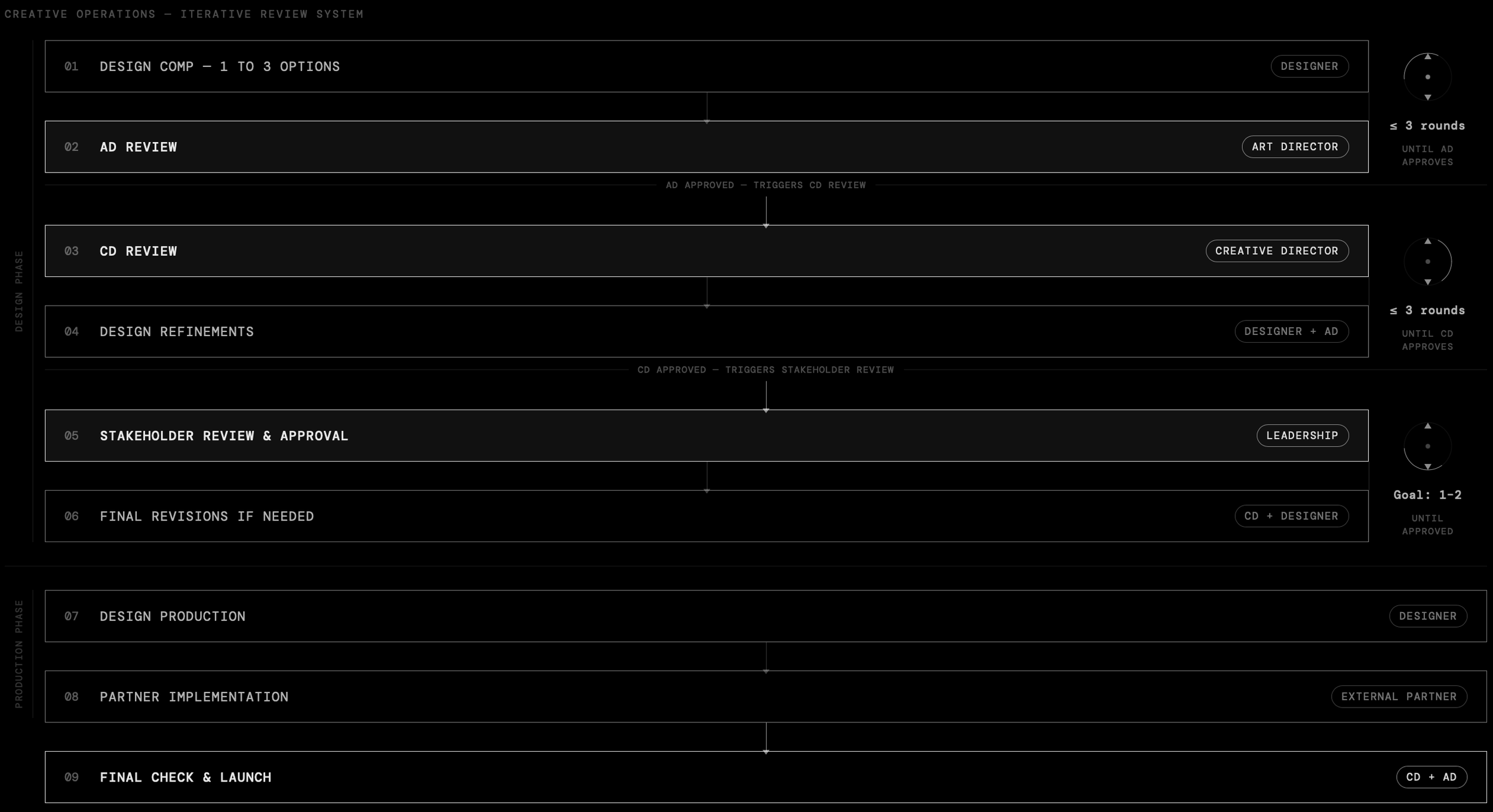
END-TO-END REVIEW & DELIVERY PROCESS
A flexible design + review process built to protect creative quality without slowing production. Every stakeholder has a designated gate — so nothing ships without the right set of eyes, in the right order.
See the process → -
DROPBOX ORGANIZATION / COMPANY-WIDE SYSTEMS
Purpose-built folder structures for designers, photographers, marketing, and wholesale partners — designed around how each team actually looks for files. Built through 12+ years collaboration with freelance clients, implemented at VereVerto and scaled at 686.
-
CREATIVE BRIEFS + CROSS-DEPARTMENT REQUEST FORMS
A full GTM briefing infrastructure: email, homepage, performance ads, and shoot production — each with its own brief template, request intake form, and Asana subtask chain that feeds directly into the workback system.
-
TEMPLATES, SYSTEMS, AND PERFORMANCE CREATIVE FRAMEWORKS
A modular Figma ecosystem built for speed and brand consistency — email, homepage, PDP, PCP, and performance ad templates, each with embedded storytelling frameworks. Designed so any team member can execute on-brand without starting from scratch.
Creative Operations
A snap shot of a flexible creative workflow, which expands and contracts based on team size, collaborator count, and time to market.
DAM & Asset Structure

A company-wide asset system built for speed, clarity, and zero hand-holding.
Partner Access
Separate permission structures for external partners — wholesale, vendors, and agencies. Each see exactly what they need and nothing they don't.

Team Collaboration
Universal folders for the most common asks — campaign assets, brand files, approved imagery — organized so intuitively that partners find what they need themselves.

File Naming
File naming conventions designed for search, not memory. Every asset is locatable by anyone on the team. Built through collaboration and intuition from the team.

Folder Structures
Folder hierarchies built around the creative calendar — seasonal, category, approval stage, and archive. Nothing lives in two places. Nothing gets lost at handoff.
Briefing Systems
Every brief is a strategic decision made early so it doesn't become a problem later.
BRIEFING SYSTEMS 01Creative Direction
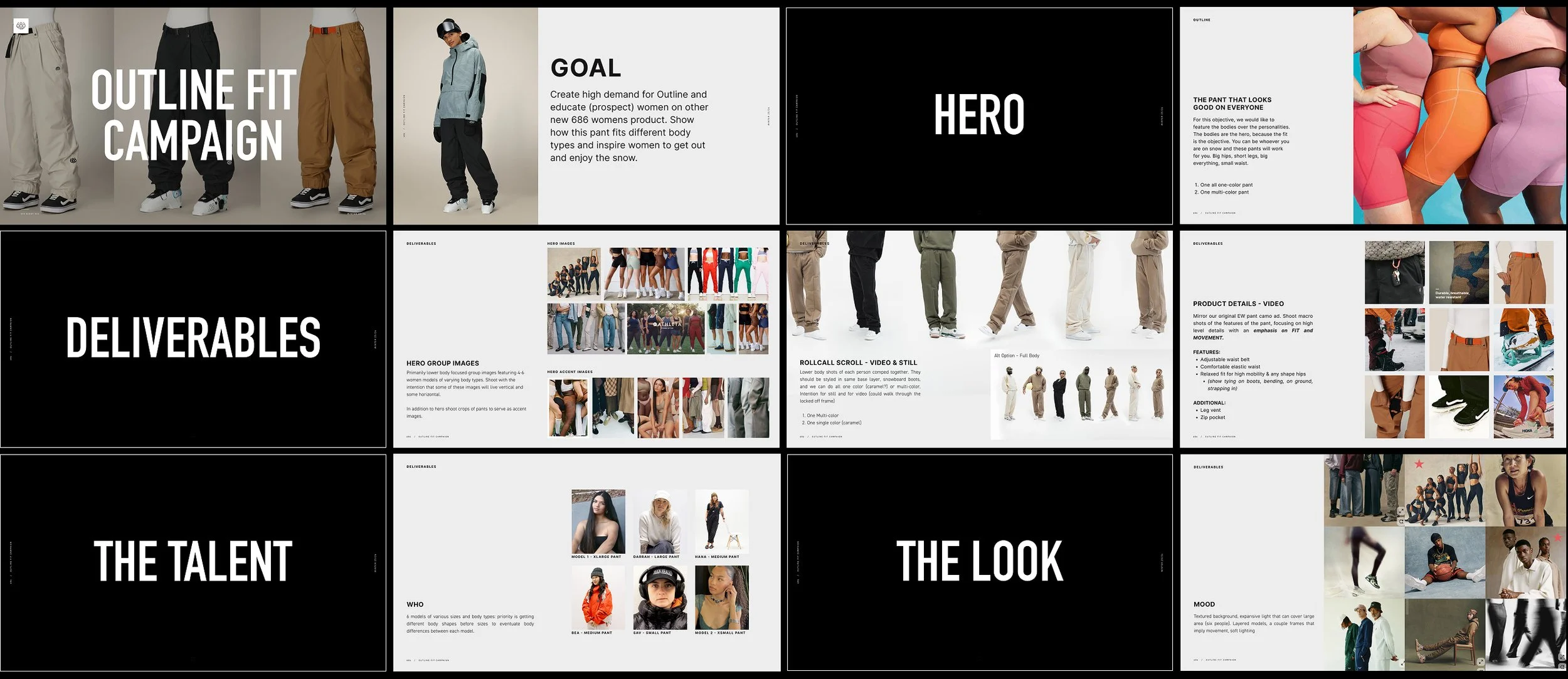
Every shoot started with a creative direction document — campaign goal, talent direction, shot-by-shot deliverables, and reference imagery — so the entire team walked in knowing exactly what to make and why. Nothing left to interpretation, nothing decided on set.
BRIEFING SYSTEMS 02Campaign Briefing & GTM Organization
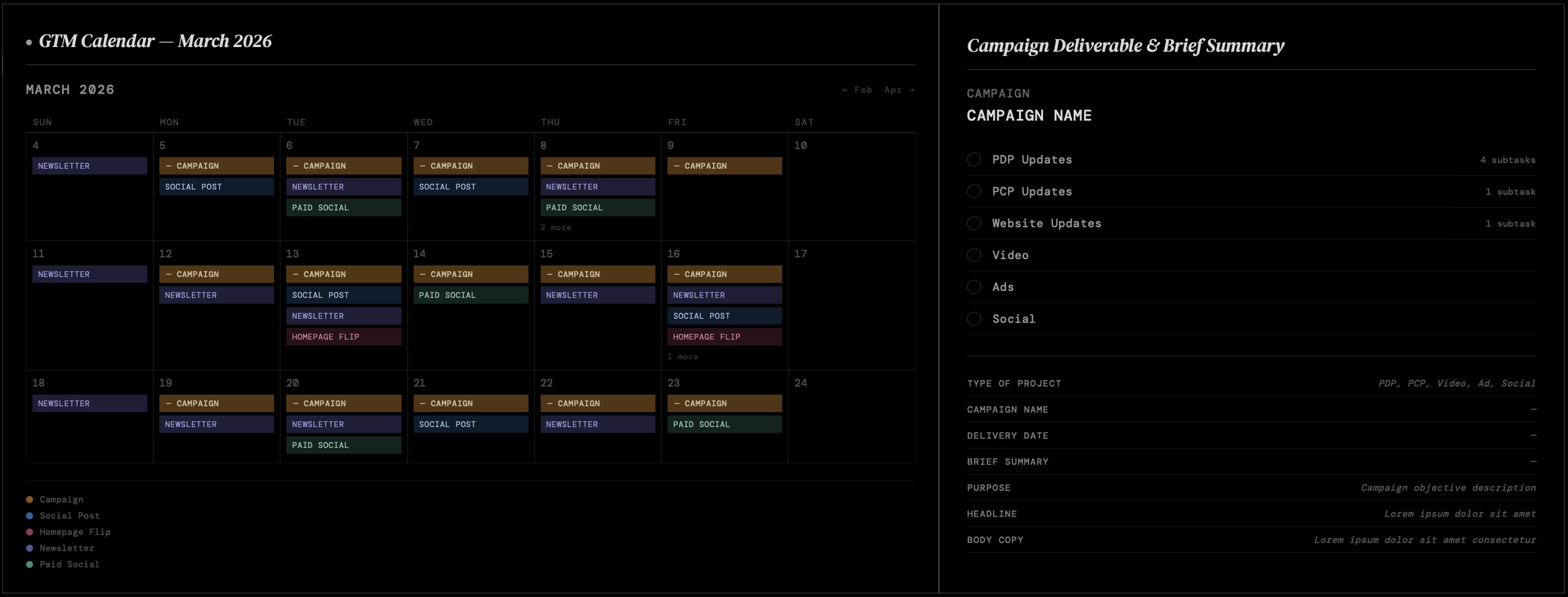
Every campaign started as a templated task inside the GTM Calendar — with pre-built subtask chains covering every deliverable from PDP to homepage to email. The calendar and the brief were the same object. Every collaborator knew what was assigned, when it was due, and where to deliver it.
BRIEFING SYSTEMS 03Design Request Intake & Tracking
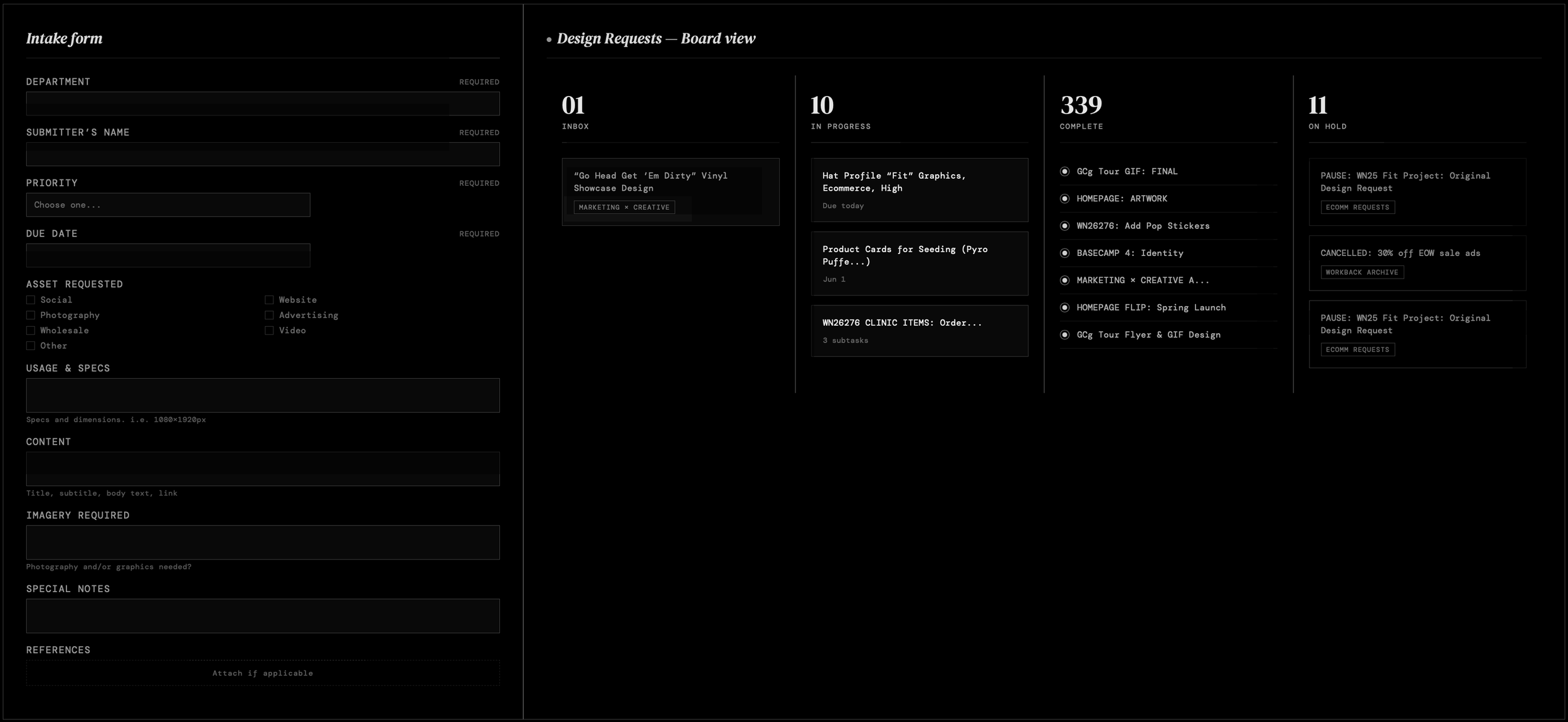
Any department could submit a design request through a structured intake form that routed directly into Asana and assigned to the right designer. No Slack messages, no back-and-forth. 339 completed requests over 3 years from a 3-person team, running parallel to full GTM, catalog, and campaign output.
Figma Infrastructure
A Figma infrastructure built for speed, consistency, and creative teams who can't afford to start from scratch.
FIGMA INFRASTRUCTURE 01Digital Module Guide
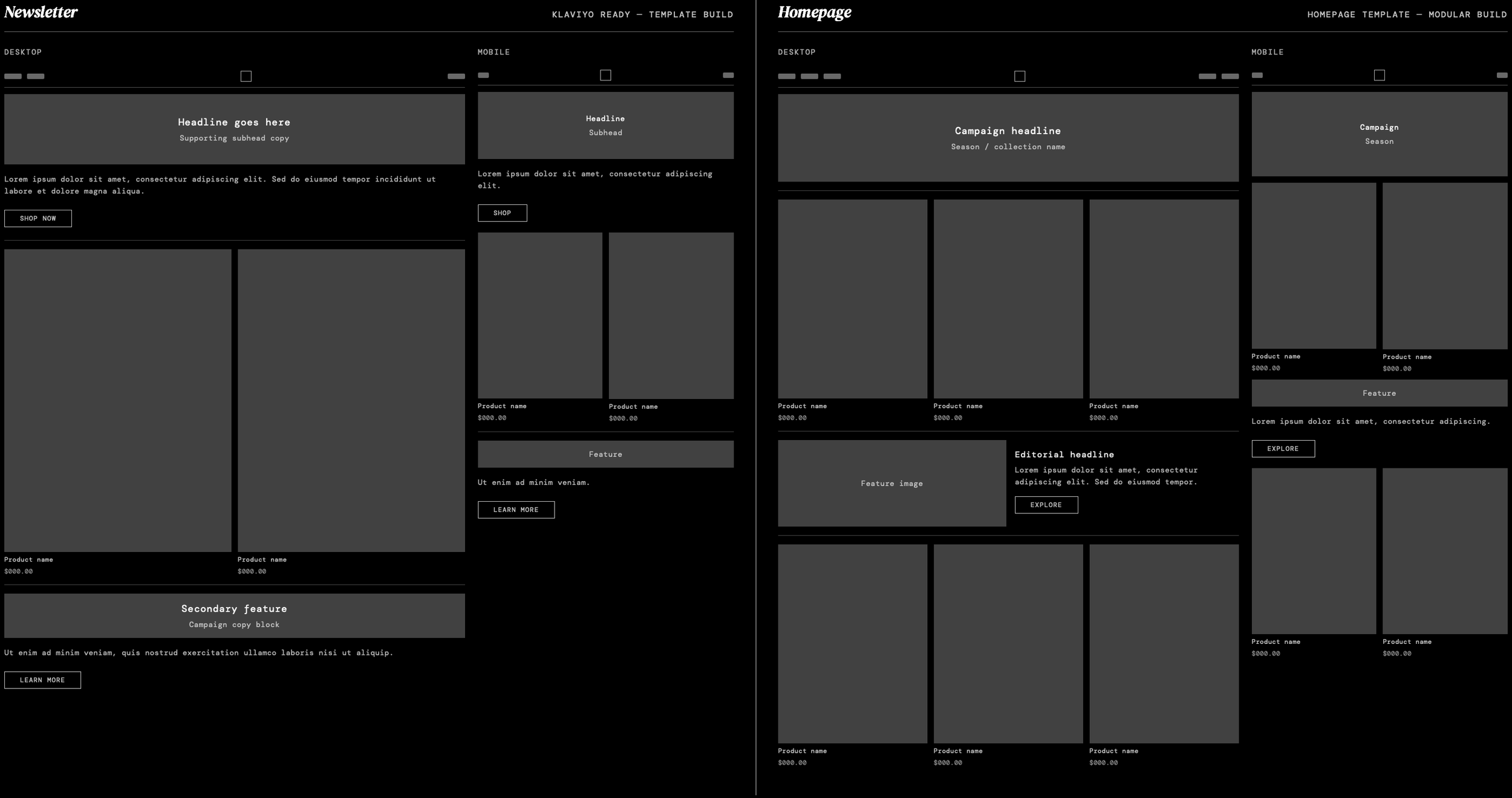
A unified design system across every digital surface — newsletter and homepage — each built with reusable modules for desktop and mobile, designed for rapid deployment and brand consistency at scale.
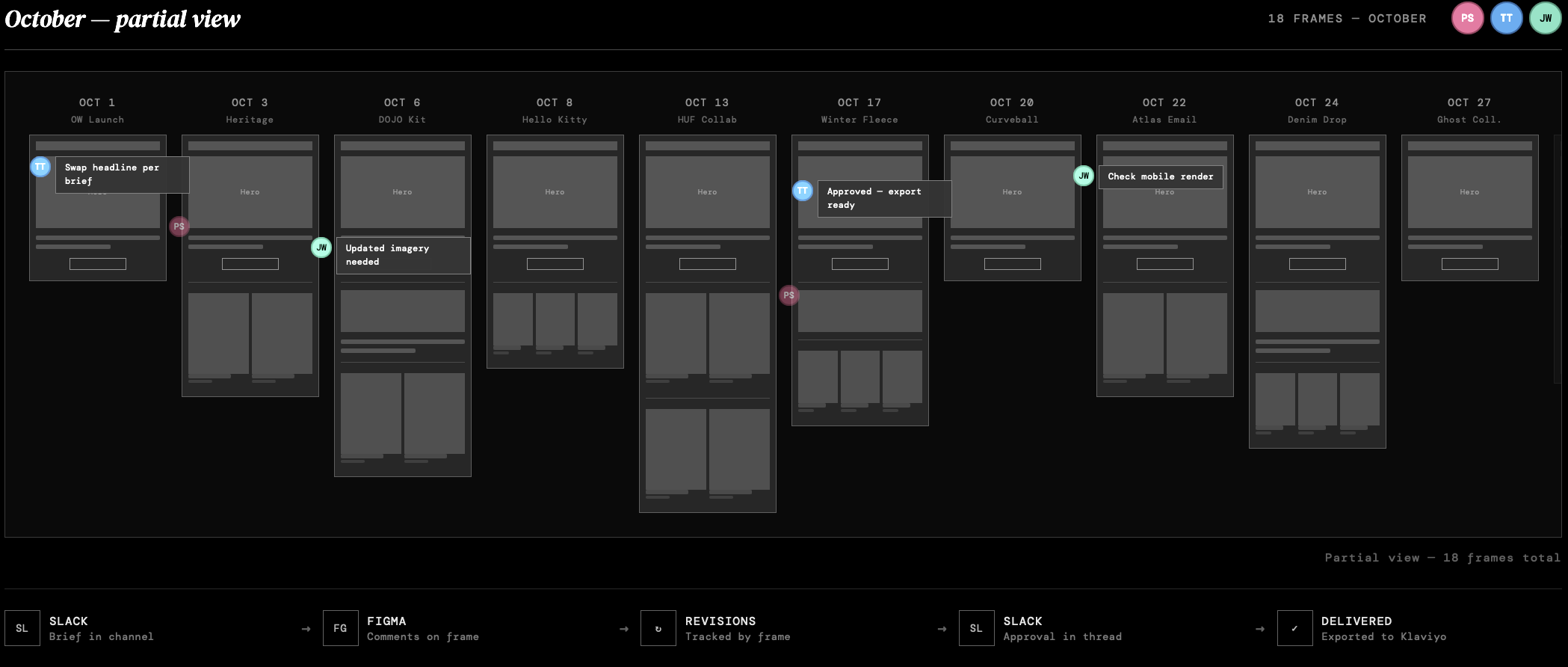
FIGMA INFRASTRUCTURE 02Monthly Layouts & Feedback Loops
Creative feedback lived inside the file. Comments replaced email chains and shuffling comps, Revisions were tracked, and Slack callouts linked to rounds of revisions — closing the loop between brief, review, and final delivery.